
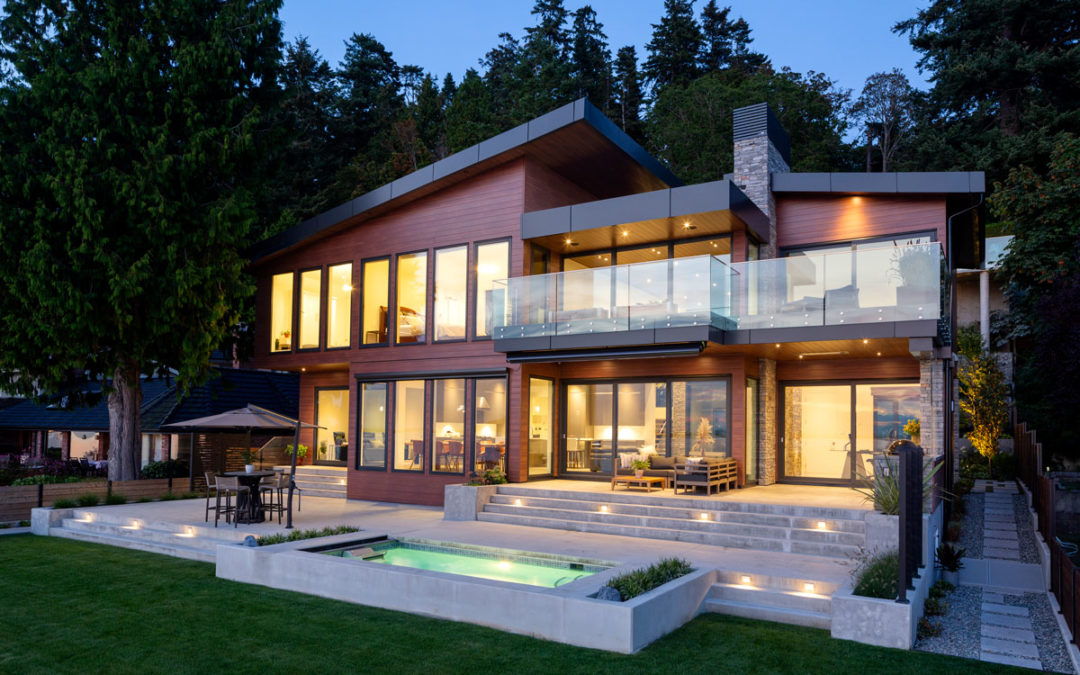
Building a custom home in Metro Vancouver is a high stakes investment. We live in a coastal rainforest, which means your home is essentially sitting in a giant humidifier for six months of the year. The wind pushes rain into every crevice, and the salt air near the Burrard Inlet can eat through standard finishes in no time.
Choosing your exterior is not just about what looks good in a rendering. It is about selecting a shield that can handle 150 centimeters of annual rainfall without rotting, warping, or growing a layer of green algae. To get this right, you have to prioritize moisture management over everything else.
Prioritize The Rainscreen As Your Primary Defense System
In Vancouver, the most important part of your exterior is actually the part you cannot see. A rainscreen is a required building technique that creates a gap between your siding and the actual walls of your house. This allows moisture to drain and air to circulate.
When you are choosing materials, you must ask how they interact with this system. Some materials, like heavy stone, require more robust support within the rainscreen. Others, like metal, allow for very thin profiles. If your material does not play nice with a rainscreen, it simply is not an option for a custom home in British Columbia.
The physics are simple. Water will eventually get behind your siding. Whether it is through a tiny crack in the caulking or driven by 80 kilometer per hour winds, moisture is persistent. The rainscreen ensures that when water gets in, it has a clear path to get out. Without this, your beautiful new siding is just trapping rot against your structural studs.
Select Fiber Cement For A Rot Proof Wood Alternative
If you love the look of classic horizontal siding or cedar shingles but hate the idea of painting every three years, fiber cement is the answer. This material is made from a mix of wood pulp and cement, meaning it is physically incapable of rotting.
In our damp climate, traditional wood siding absorbs water, expands, and eventually causes the paint to peel. Fiber cement stays dimensionally stable. Whether it is a freezing February night or a humid July afternoon, these boards will not shrink or swell.
- It offers a Class A fire rating, which is increasingly important for homes near forested areas or in dense neighborhoods.
- The baked on color technology resists the UV fading that usually happens on the south facing side of Vancouver homes.
- It mimics the texture of natural wood so closely that most people cannot tell the difference from the curb.
- It is heavy and durable, meaning it will not dent if a windstorm throws a branch against your house.
Fiber cement is also pest resistant. In many parts of the Lower Mainland, woodpeckers and carpenter ants can wreak havoc on natural wood siding. Fiber cement provides no food source for insects and is too hard for birds to peck through, which saves you a fortune in long term repairs.
Choose Standing Seam Metal For Ultimate Water Shedding
Metal cladding is no longer just for warehouses. In modern North Vancouver and West Side custom builds, metal is a premium choice because it is functionally waterproof. While other materials might resist water, metal rejects it.
A standing seam metal system has no exposed fasteners. This means there are no holes for the rain to find. For roofs and walls that face the prevailing winds coming off the Pacific, metal provides a level of security that other materials struggle to match.
- Aluminum is the preferred choice for homes within five kilometers of the ocean because it does not rust.
- Metal panels reflect solar heat in the summer, helping keep your custom home cool during heat waves.
- It requires the least amount of maintenance of any material on this list; a simple rinse is all it needs.
- The clean lines and hidden seams create a sleek, architectural look that fits the West Coast Modern aesthetic perfectly.
The longevity of metal is hard to beat. While you might replace vinyl or wood siding twice in a fifty year period, a high quality zinc or aluminum exterior can easily last the lifetime of the building. It is an upfront investment that pays for itself through durability.
Use Natural Stone To Ground The Home Against Coastal Winds
Stone adds a sense of permanence and weight that fits the rugged landscape of the Pacific Northwest. However, choosing stone in Vancouver requires careful thought about porosity. You want stones that will not soak up water and become heavy or prone to cracking during a cold snap.
Locally sourced basalt or granite are excellent choices because they are already acclimated to our environment. These stones are incredibly dense and will look exactly the same fifty years from now as they do the day they are installed.
- Stone acts as a thermal buffer, slowing down the transfer of heat and cold into your home.
- It is the most durable material against physical impact and high velocity winds.
- Using stone on the lower third of a house protects the structure from splash back moisture from the ground.
- Modern thin veneers allow you to get the look of solid stone without the massive structural upgrades required for full bed masonry.
When stone is used correctly, it creates a visual connection to the mountains and forests that surround us. It is also an excellent material for preventing moisture from wicking up from the soil into the wall assembly, which is a common issue in lower lying areas like Richmond or Delta.
Opt For Chemically Modified Wood To Get Natural Warmth Without The Rot
We all want that iconic West Coast cedar look, but natural cedar in a rainforest is a high maintenance relationship. If you want the real feel of wood without the inevitable decay, look at modified woods like Accoya or Kebony.
These products undergo a process that changes the wood at a molecular level, making it unrecognizable to the fungi that cause rot. It essentially turns a soft wood into a material with the durability of a tropical hardwood, but without the environmental guilt.
- It is significantly more stable than cedar, meaning your mitered corners and tight joints will stay tight.
- You can leave it untreated to weather into a beautiful driftwood grey, or stain it to keep a deep gold tone.
- It is non toxic and 100 percent recyclable, fitting the green building standards often required in Vancouver.
- It carries warranties of up to 50 years, even when used in high moisture environments.
Modified wood is the perfect compromise for a homeowner who refuses to use synthetic materials. You get the grain, the scent, and the texture of real timber, but you lose the constant anxiety of checking for soft spots after every rainy season.
Reconsider Modern Stucco As A Seamless Moisture Barrier
Stucco got a bad rap in the nineties, but technology has changed completely. Modern EIFS (Exterior Insulation and Finish Systems) are designed specifically for wet climates. They use acrylic polymers that make the finish flexible and waterproof.
The benefit of stucco in a custom build is the lack of seams. Every time you have a joint in your side, you have a potential leak point. Stucco creates a continuous skin around your home that is very difficult for water to penetrate.
- It allows for unique architectural shapes, curves, and recessed windows that siding cannot achieve.
- The integrated insulation layers can significantly boost your home’s R-value and energy efficiency.
- Acrylic finishes are breathable, meaning they allow water vapor to escape from inside the wall while blocking liquid water from entering.
- It can be tinted to any color imaginable, allowing for total design freedom.
Modern stucco is applied in layers that include a drainage plane. This ensures that even if a small crack forms, the water cannot reach the wood framing. It is a sophisticated, multi layered system that provides some of the best thermal performance available in the market today.
Evaluate Window Frame Materials For Thermal Performance And Seal Integrity
In a Vancouver custom home, the windows are often the biggest investment. They are also the most common point of failure. When choosing your exterior, you must match your siding to a window frame that can handle the pressure of wind driven rain.
Fiberglass and aluminum clad wood are the top tier choices here. Fiberglass expands and contracts at almost the exact same rate as the glass panes, which keeps the seals from breaking over time. Aluminum cladding protects the interior wood from the harsh BC rain while providing a crisp, clean exterior look.
- Look for windows with high DP (Design Pressure) ratings, which indicate how much wind and rain they can handle before leaking.
- Ensure your builder uses high performance flashing tapes and metal sills to direct water away from the window openings.
- Triple glazing is highly recommended for sound dampening, especially if you are building near transit corridors or under flight paths.
Window installation is where most builders fail. It does not matter how expensive the window is if the interface between the window and the rainscreen is not perfect. This area requires meticulous attention to detail and high quality sealants that stay flexible in cold weather.
Remember to Check Local Zoning And Wildfire Interface Requirements Before Buying
Before you fall in love with a specific material, you need to check the local bylaws for your specific lot. Many areas in West Vancouver or the North Shore have Wildfire Interface requirements. This means you might be restricted to non-combustible materials like stone, metal, or fiber cement.
Similarly, some heritage areas in Vancouver have strict rules about using authentic materials. You may be required to use real wood or specific styles of brick. Always coordinate your material choices with both your architect and your local municipality to avoid expensive changes mid construction.
- Different municipalities have different interpretations of what counts as a rainscreen.
- Some neighborhoods have restrictive covenants that dictate the color palette you can use.
- Fire ratings for exterior walls are becoming stricter in densifying areas like the Cambie Corridor.
- Ensure your material choices meet the Step Code requirements for energy efficiency in your specific city.
The Key is to Partner With A Builder Who Understands Vancouver Building Science
You can buy the most expensive, durable materials on the planet, but if they are installed incorrectly, they will fail within five years. In the Metro Vancouver climate, the how is just as important as the what.
A builder like Best Builders focuses on the envelope first. We look at the flashing, the rainscreen, and the sealants with a microscopic level of detail. We know that a custom home is a legacy, and that legacy depends on how well the exterior stands up to the next fifty winters.
We help you navigate the sea of choices, from the density of the stone to the gauge of the metal panels. Our goal is to ensure that your home remains a dry, comfortable, and beautiful sanctuary regardless of what the Pacific Northwest weather throws at it.
When you are ready to choose the shell for your dream home, look for a team that understands the intersection of aesthetics and engineering. Your home deserves an exterior that is as tough as it is beautiful. By making informed choices today, you are protecting your investment for decades to come.
Best Builders has been renovating existing homes and building new ones for over 20 years. They are a multiple-award-winning builder that brings fine craftmanship to projects, turning dreams into reality. If you have any questions about this article or would like to talk to us about your home project, please call us at (604) 943-2378 or email us at info@bestbuilders.ca